
Should you be buying a mattress online, or is a showroom still the smarter place to spend that much money? It is a fair question, and the answer is not the same for everybody. We compare the pros and cons of both approaches so Australians can choose the buying method that suits them.
A new mattress is one of the biggest purchases you’ll make for your bedroom. We spend around 30% of our lives sleeping, and the right mattress makes a real difference to the quality of our rest and our health. Before you start comparing brands or materials, there’s a more basic decision to make: online or in-store?
Both options have genuine advantages and real drawbacks. This guide lays out the full picture for Australian buyers.

What you are really choosing between
The online versus in-store debate is often framed as price against comfort, but that undersells it. You are really choosing how you want to manage risk. A showroom lets you reduce the risk of a poor match before you pay. An online purchase lets you reduce it after you pay, through a sleep trial and a returns policy.
Neither approach removes the risk entirely. A mattress that feels perfect for ten minutes can still disappoint on night three, and a mattress that suits you after a fortnight can feel strange on the first night. Keep that in mind as you read the pros and cons below, because the best choice usually depends on which kind of risk bothers you more.
Whichever way you buy, it helps to understand the basics of construction and feel first. Our guide to innerspring versus pocket spring mattresses explains one of the main differences you’ll meet on either kind of shopping trip.
Buying a mattress in-store: pros and cons
Before online shopping, in-store purchasing was the only option, and it remains popular in Australia, with retailers like Harvey Norman, Beds n Dreams, and Forty Winks maintaining strong foot traffic.
Pros of buying in-store
Test before you buy. The biggest advantage of in-store shopping is being able to physically lie on the mattress and assess its feel. You can evaluate firmness, texture, and how it responds to your body weight, all before committing. For shoppers who have very specific comfort requirements, this is invaluable.
Fewer choices, less decision fatigue. The overwhelming volume of online options can cause paralysis. In a physical store, you’re presented with a curated range, which can make the final decision simpler.
Delivery, setup, and removal included. Most physical mattress retailers offer same-week delivery, professional setup (including placing the mattress on your bed frame), and free removal of your old mattress. For those who can’t physically move a mattress themselves, this is a significant practical benefit. If removal is not included, our explainer on recycling a mattress in Australia covers the alternatives.
In-person customer service. Speaking directly with a salesperson allows for real-time questions and guidance. For first-time buyers or those with specific health concerns, this can be reassuring.
Cons of buying in-store
Sales pressure. In-store salespeople are incentivised to sell often toward higher-margin products. Without doing research beforehand, you may be guided toward a more expensive mattress than you need. Come prepared: know the brands and features you’re interested in before walking in.
A 5-minute test isn’t meaningful. Lying on a mattress for a few minutes in a brightly lit store, fully clothed, is a very different experience from actually sleeping on it for a night. Many people find their in-store “favourite” feels very different after the first night at home.
Limited or no sleep trials. While some physical retailers have started offering sleep trials, many still don’t and some charge return fees. Online brands typically offer 100+ night trials as standard.
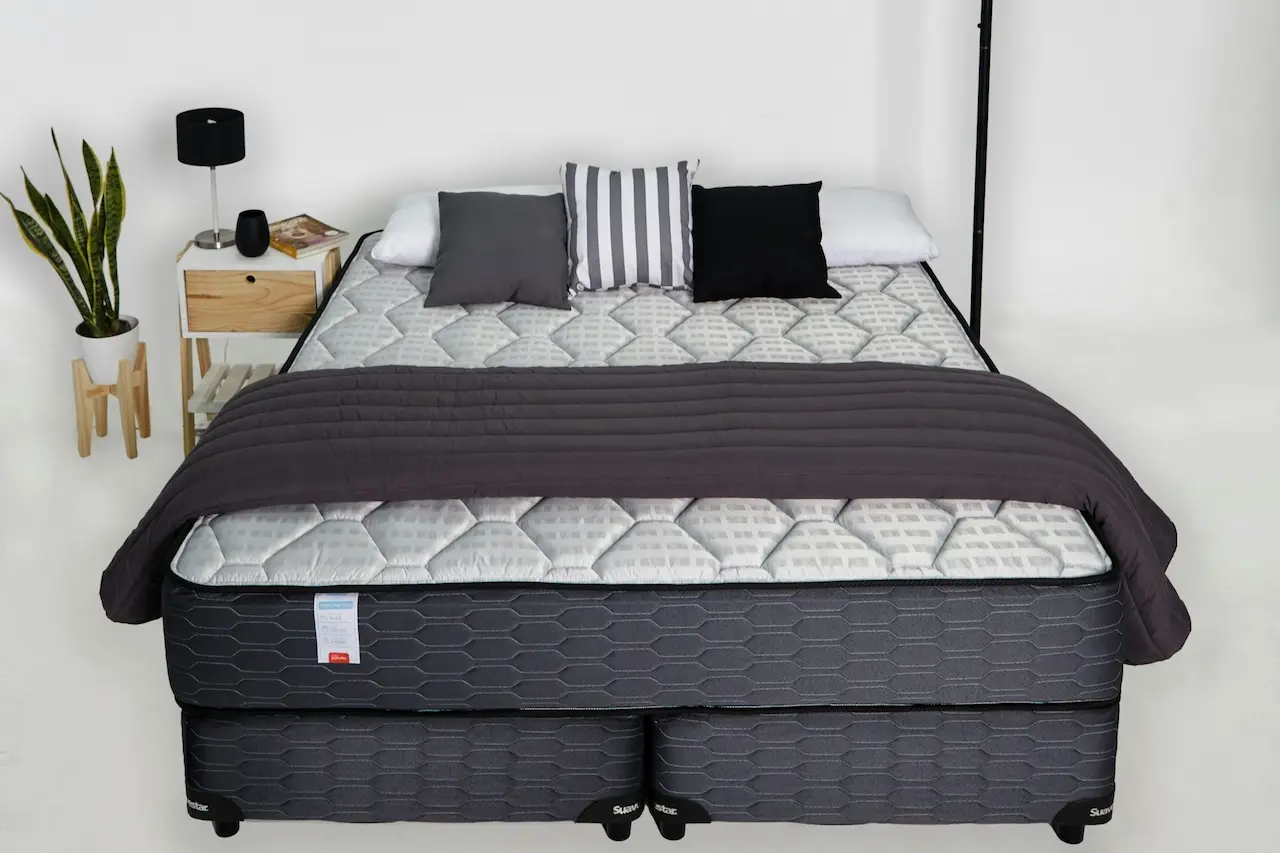
Buying a mattress online: pros and cons
Australia’s online mattress market has expanded rapidly, with brands like Koala, Emma, Ecosa, Sleeping Duck, and Peacelily building large customer bases through direct-to-consumer models. Direct-to-consumer simply means the brand sells straight to you, without a third-party retailer in the middle.
Pros of buying online
Convenience. You can research, compare, and purchase from home at your own pace, without sales pressure or time constraints. The entire process from browsing to delivery can be completed in minutes.
Long sleep trials. This is perhaps the most compelling advantage of online mattress buying. Most Australian online brands offer 100–120-night sleep trials, allowing you to test the mattress in your actual sleep environment before committing. This is far more meaningful than an in-store test.
Better prices. Without the overhead costs of a physical retail space, online brands typically offer lower prices for comparable quality. Sleep research resource “Sleep Like The Dead” found that online mattress buyers can save up to 15% compared to equivalent in-store purchases.
Higher quality on average. Research has also suggested that online-first mattress brands tend to outperform store-only brands on quality metrics, likely because their business model relies heavily on word-of-mouth and reviews rather than high-pressure selling.
Free shipping and returns. Free delivery and free returns are standard practice among Australian online mattress retailers. Some even offer free collection from your home if you decide to return.
More customisation options. Many online brands allow you to customise firmness, height, and other features before ordering, something rarely available in-store.
Cons of buying online
Decision fatigue. The sheer volume of choice can be overwhelming. With dozens of brands and hundreds of models available, some buyers find the research process exhausting.
Self-assembly required. Most online mattresses arrive as “bed-in-a-box” compressed rolls. While they expand quickly once unboxed, you’ll typically need to set them up yourself. Some online retailers offer paid setup services, but this isn’t universal.
Returns can be complicated. While policies are improving, some online brands still require you to coordinate your own pickup or repackaging for returns. Read the returns policy carefully before buying.
Can’t physically test before buying. Despite sleep trials, some buyers are simply uncomfortable purchasing a mattress without lying on it first. If this is you, consider brands that sell both online and in physical showrooms. Peacelily and some others have this option.
What to check before you rely on a sleep trial
A sleep trial is only as good as its fine print. The headline length matters less than the conditions attached, so read the terms before you pay. Look for whether there is a minimum period you must keep the mattress before a return is accepted, since some brands expect you to allow your body time to adjust. That fits with what we say in our guide to breaking in a new mattress: first impressions on night one are not always reliable.
Check who pays for the return and who arranges it. Check what condition the mattress must be in, and whether a protector is expected. A stain can void a trial with some sellers, which is one reason our readers often ask whether mattress protectors are necessary. I’d argue a protector is cheap insurance on any mattress bought on trial.
It is also worth knowing that a sleep trial is a goodwill policy offered by the seller, separate from your rights under Australian Consumer Law. The Australian Competition and Consumer Commission publishes information on consumer guarantees, which apply when a product is faulty, regardless of whether you chose it in a showroom or on a screen.

How to test a mattress properly in a showroom
If you do shop in-store, you can get far more from the visit than a quick flop onto the nearest bed. Wear comfortable clothes, take your time, and lie in your usual sleeping position rather than only on your back. Side sleepers in particular should check whether the shoulders and hips sink in comfortably while the spine stays reasonably straight.
Bring your partner if you share a bed, and test the mattress together. Movement transfer, edge support and how each of you feels at the same time all matter. Ask what the mattress is made from, because the materials tell you more about long-term feel than the marketing name does.
Decide in advance whether you lean firm or soft. Our guide to choosing between a firm and soft mattress will help you walk in with a clear brief, which is also the best defence against sales pressure. For general background on how mattresses are built, the Wikipedia entry on mattresses is a handy reference.
Which is better: online or in-store?
The honest answer depends on your priorities. Buy in-store if you want to physically test the mattress first, prefer face-to-face guidance, or need delivery and setup handled for you. Buy online if you want better prices, more choice, the flexibility of a long sleep trial, and a pressure-free shopping experience.
The best of both worlds? Research online brands thoroughly, then look for any that have showrooms or retail partners where you may be able to test a mattress in person, which you then order online at a lower price with a longer return policy.
Practical details can tip the balance too. Check that the mattress will suit your bed base, and think about bed height and how easily you can get in and out. Our guide to standard bed height in Australia is worth a look before you order, particularly if you are changing both base and mattress.
Making the final call
For most Australian buyers, buying online offers the strongest overall value: better prices, longer trials, more choice, and free delivery. The 100-night sleep trial effectively removes the biggest risk of online purchasing. That said, if tactile testing and white-glove delivery matter to you, an in-store purchase from a reputable retailer remains a perfectly valid choice.
Do your research, either way. A mattress is a significant investment you’ll live with for 7–10 years, and a little homework up front is far cheaper than a bad night, repeated.
Once your mattress is home, look after it. Our advice on how often to rotate or flip your mattress will help it last. For independent guidance on sleep and wellbeing, the Sleep Health Foundation is a good starting point.
Related Articles


