


Can make mattress — Discover 10 proven methods to make your mattress firmer, from replacing bed slats to adding a firm latex topper. Learn the long-term effects of sleeping on a too-soft mattress and when it’s time to replace it.
Waking up with a sore back or sinking too deeply into your mattress are classic signs that your bed has become too soft. Over time, even quality mattresses lose their firmness as materials compress and break down. The good news is that you don’t always need to rush out and buy a new mattress; there are several effective methods to restore or improve the firmness of your existing bed.
In this guide, we’ll walk you through 10 proven ways to make your mattress firmer, explain why mattresses soften over time, and help you figure out when it truly is time to invest in a replacement.

Why Do Mattresses Get Softer Over Time? (Can make mattress)
All mattresses soften gradually through normal use. The foams, springs, and fibres that make up a mattress are designed to absorb pressure night after night, and this repeated compression takes a toll. Memory foam in particular is prone to body impressions, where the material conforms to your shape and eventually stops bouncing back fully. Innerspring mattresses lose tension in their coils, while latex slowly oxidises and becomes less resilient.
Other contributing factors include sleeping with a partner (doubling the weight load), placing the mattress on an inadequate base, and exposure to heat and moisture. Once you understand what’s causing the softness, you can target your solution more precisely.
10 Methods to Make Your Mattress Firmer
1. Check Your Trial Period or Warranty
Before trying any DIY fix, check whether your mattress is still under warranty or within a trial period. Many Australian mattress brands offer 10-year warranties that cover sagging beyond a certain depth (usually 25–35mm). If your mattress has developed a visible body impression, you may be entitled to a free replacement or repair. This is always the first step to take.
2. Replace Worn Bed Slats
Bed slats that are cracked, warped, or spaced too far apart will cause your mattress to sag in the middle, no matter how good the mattress itself is. Ideal slat spacing is no more than 6–7cm apart. Replace any damaged slats and ensure they provide even support across the full surface of the mattress. This one change alone can dramatically improve how firm your mattress feels.
3. Add Plywood Under the Mattress
Placing a sheet of plywood between your mattress and the base is a time-tested method for adding firmness. Use a piece of 18–25mm thick plywood cut to the same dimensions as your mattress. This creates a solid, uniform surface that prevents any sag coming from the base. Make sure the plywood is smooth and free of splinters, and consider drilling a few ventilation holes to maintain airflow.
4. Cool Down Your Bedroom
Heat causes foam materials to soften. Memory foam in particular becomes noticeably more pliable at higher temperatures. If your bedroom runs warm, your mattress may feel firmer in winter and mushier in summer. Try lowering your room temperature to between 18 and 21 °C. Not only will this improve sleep quality, but it will also help your mattress maintain its shape and firmness.
5. Test on the Floor
If you suspect your bed base is the problem rather than the mattress itself, place the mattress directly on the floor for a night or two. A firm, flat floor gives maximum support. If the mattress feels noticeably firmer on the floor, the issue lies with your base rather than the mattress, and you can focus your efforts (and budget) on fixing the base.
6. Rotate or Flip Your Mattress
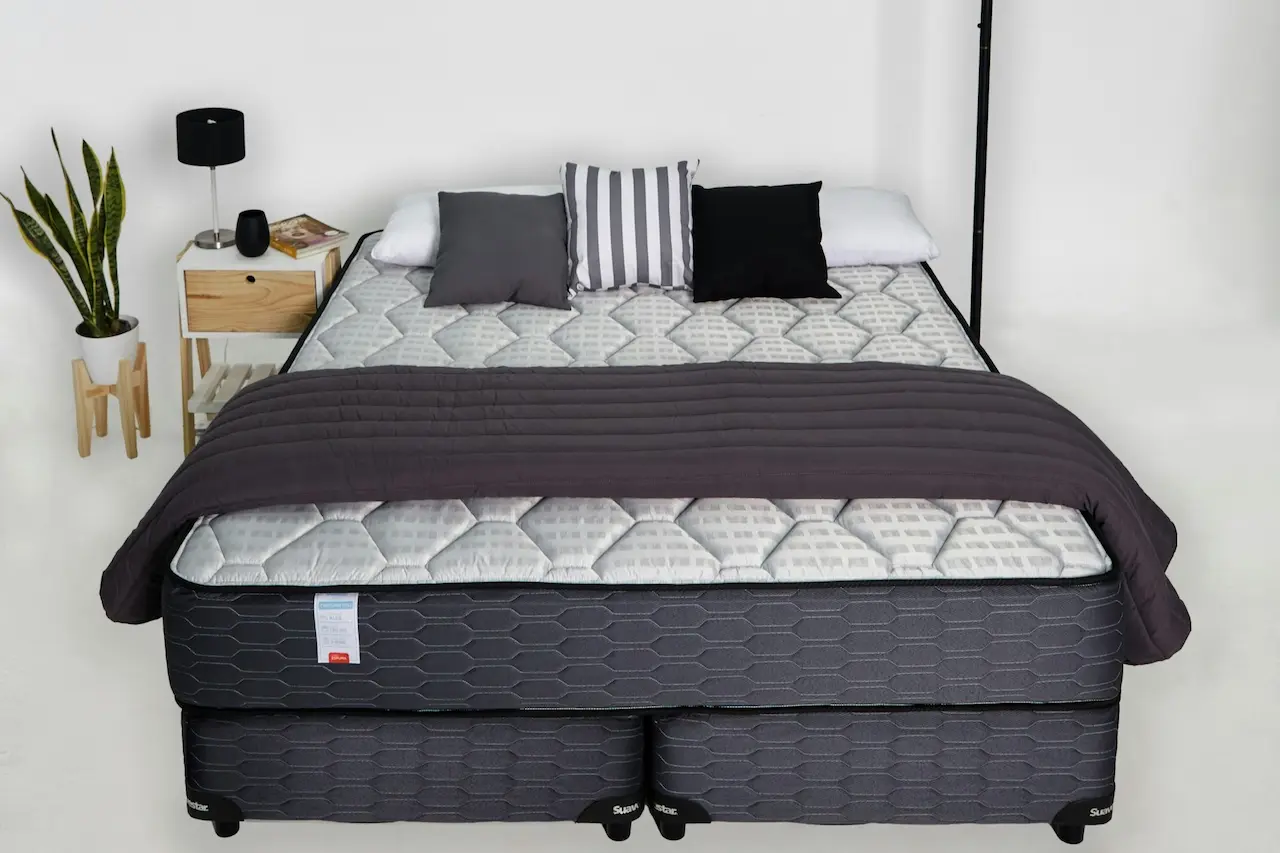
Rotating your mattress 180 degrees every 3–6 months distributes wear more evenly, preventing deep body impressions from forming in one spot. If your mattress is double-sided (some older innerspring models are), flipping it gives you an entirely fresh sleeping surface. Check the manufacturer’s instructions first; many modern mattresses are one-sided and should not be flipped.
7. Use Tight, Firm Bedding
Loose or overly thick mattress protectors and pillow-top covers can add an unwanted layer of softness. Switching to a thin, tightly fitted mattress protector removes that cushioning layer and lets you feel the mattress’s true surface. Some people also find that removing their mattress topper entirely (if they use one) immediately restores the mattress’s original feel.
8. Air Out Your Mattress Regularly
Moisture absorbed from perspiration softens foam over time. Airing out your mattress by removing all bedding and opening windows helps evaporate trapped moisture and restore the material’s original properties. Doing this monthly, or at least seasonally, keeps your mattress fresher and firmer. On dry days, you can prop the mattress against a wall outdoors for maximum ventilation.
9. Add a Firm Mattress Topper
While most toppers add softness, firm latex toppers with an ILD (Indentation Load Deflection) rating of 30 or above can actually increase the firmness of your sleeping surface. Look specifically for natural latex toppers rated “firm” These add a responsive, supportive layer that counteracts the softness below. Avoid memory foam toppers if firmness is your goal, as these will make the problem worse.
10. Check Your Box Spring or Platform Base
Box springs can sag or break internally without any visible signs from the outside. If your mattress sits on a box spring, press down firmly across different areas to check for soft spots. A sagging or broken box spring will cause even a brand-new mattress to feel unsupported. Platform bed bases with solid or closely-slatted surfaces generally provide better and more consistent support than older box spring designs.

Long-Term Effects of Sleeping on a Too-Soft Mattress
A mattress that is too soft for your body type and sleep position can cause real health problems over time. Without adequate support, your spine falls out of its natural alignment during the hours you sleep, which is roughly a third of your life. Side sleepers may experience hip and shoulder pain as these pressure points sink too deeply. Back sleepers often wake with lower back aches as the lumbar region sags into the mattress rather than being supported.
Poor spinal alignment during sleep leads to muscle tension, restricted blood flow, and disrupted sleep cycles as your body unconsciously shifts position trying to find relief. Over months and years, this can contribute to chronic back and neck pain, reduced sleep quality, and daytime fatigue.
When Should You Replace Your Mattress?
Not every soft mattress can be fixed. If your mattress has a visible body impression deeper than 35mm, or if it is more than 8–10 years old, the internal support structure is likely compromised beyond repair. At this point, no topper, plywood sheet, or base adjustment will restore adequate spinal support and continuing to sleep on it may worsen existing pain.
Signs it’s time to replace your mattress include: waking up stiff and sore every morning, a visibly sagging surface, coils you can feel through the top layer, or simply sleeping much better in a hotel or on someone else’s mattress. Your sleep quality is worth investing in.
Conclusion
A softer-than-ideal mattress doesn’t necessarily mean you need to spend thousands on a replacement. By addressing the root cause, whether it’s a worn base, poor ventilation, or just uneven wear, you can often restore meaningful firmness and extend your mattress’s useful life. Start with the simplest fixes (base inspection, rotation, airing out) before moving to more involved solutions like plywood or firm toppers. And if your mattress is old and visibly degraded, investing in a quality replacement is genuinely the best thing you can do for your sleep and your back.
Related Articles
- Firm vs Soft Mattress: How to Choose the Right One for You
- Are Mattress Protectors Necessary?
- Breaking in a New Mattress
For independent guidance on sleep and wellbeing, the Sleep Health Foundation is a good starting point.