
Accurate sleep trackers — Sleep trackers are becoming increasingly popular, but how accurate are they really? We compare Fitbit, Samsung Galaxy, Garmin, and Oura Ring against clinical polysomnography to help you choose the right device.
Sleep trackers are everywhere. From slim wristbands and smartwatches to high-tech rings and bedside sensors, the market for consumer sleep monitoring devices has exploded in recent years. As the wellness and self-improvement industry grows, more Australians than ever are turning to these gadgets to understand their sleep patterns, identify problems, and take steps toward better rest.
But there’s a critical question worth asking before you strap on a device: how accurate are sleep trackers, really? Can a consumer wearable reliably tell you how much deep sleep you’re getting, or whether you’re cycling through REM sleep properly? And are these devices useful enough to make a meaningful difference in your sleep health?
This guide dives into the science behind sleep tracking technology, compares the accuracy of four popular devices, and helps you understand what sleep trackers can and can’t tell you about your nightly rest.
Important note: If you’re experiencing serious sleep problems or suspect a sleep disorder, always consult a qualified medical professional. Sleep trackers are useful monitoring tools, but they are not diagnostic devices.
Polysomnography vs. Consumer Sleep Trackers (Accurate sleep trackers)
To understand how accurate sleep trackers are, you first need to understand what they’re being compared against. The gold standard for sleep assessment in clinical medicine is polysomnography (PSG), commonly known as a sleep study.
During a polysomnography test, a patient spends a night in a sleep clinic while technicians monitor a comprehensive range of physiological signals. These include brain wave activity (via EEG), eye movements (via EOG), muscle activity (via EMG), heart rate and rhythm (via ECG), blood oxygen levels, breathing patterns, and limb movements. The result is an extraordinarily detailed picture of every stage of sleep throughout the night.
Why Consumer Devices Fall Short of Clinical Testing
Polysomnography is the benchmark precisely because it captures data that consumer wearables cannot. Sleep trackers worn on the wrist or finger simply cannot measure brain waves or the subtle eye movements that indicate REM sleep. Without these signals, no consumer device can definitively identify sleep stages the way a clinical study can.
Polysomnography is also expensive, time-consuming, and can be stressful for patients, particularly those who already have trouble sleeping. Spending a night in a laboratory with sensors attached to your scalp is not exactly a natural sleep environment. This is part of the appeal of consumer trackers: they monitor your sleep in your own bed, in normal conditions, night after night, at a fraction of the cost.
The trade-off is accuracy. Sleep trackers offer convenience and longitudinal data trends over weeks and months, but they sacrifice the clinical precision of polysomnography. Researchers typically use PSG as the baseline when evaluating how well consumer devices perform.
How Do Sleep Trackers Work?
Most consumer sleep trackers rely primarily on accelerometer sensors that detect motion and movement. The device measures how much you’re moving throughout the night and uses this data to infer whether you’re asleep or awake, and in some cases, what stage of sleep you might be in.
This approach is called actigraphy, and it’s a well-established technique in sleep research. When you’re asleep, you naturally move less (with some exceptions). When you’re awake, you tend to move more. Actigraphy exploits this relationship to estimate sleep and wakefulness periods.

Additional Sensors and Data Inputs
More advanced sleep trackers supplement accelerometry with additional sensors and data inputs:
- Heart rate monitoring: Using optical sensors (photoplethysmography or PPG), devices measure heart rate variability (HRV) and resting heart rate, which shift predictably across different sleep stages.
- Blood oxygen monitoring: Some devices track SpO2 levels, which can dip during sleep apnoea episodes or other breathing disturbances.
- Skin temperature: Body temperature fluctuates during sleep cycles. Temperature sensors add another data dimension to improve stage detection.
- Environmental monitoring: Some trackers assess your sleep environment, measuring ambient light levels, room temperature, and noise, all of which affect sleep quality.
- Self-reported data: Many apps let you log mood, energy levels, caffeine intake, exercise, and other lifestyle factors that influence sleep. This contextual data helps the algorithm provide more personalised insights.
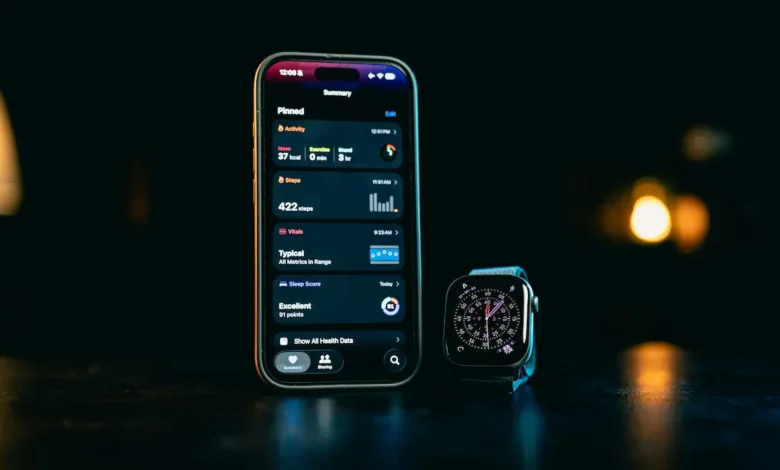
The combination of these data streams is fed into proprietary algorithms that generate the sleep metrics displayed in your app: total sleep time, time in each sleep stage, a sleep score, and trend data over time.
General Sleep Tracker Accuracy: What the Research Shows
Before looking at individual devices, it’s worth understanding the general accuracy picture that emerges from research into consumer sleep trackers as a category.
Detecting Sleep vs. Wakefulness
Consumer sleep trackers are reasonably good at telling whether you’re asleep or awake. Studies generally report an accuracy rate of 81–91% for this basic binary determination. That’s a meaningful result most of the time; the device knows you’re asleep when you’re asleep.
However, there’s an important caveat: trackers tend to overestimate total sleep time and underestimate time spent awake. This is because they rely on movement as a proxy for wakefulness. If you’re lying still in bed, unable to sleep, the device may interpret your stillness as sleep. Many people have experienced the frustration of a terrible, restless night, followed by their tracker reporting a full eight hours.
Detecting Sleep Stages
This is where consumer trackers struggle more significantly. Research indicates that sleep trackers are only correct about 50% of the time when identifying specific sleep stages, light sleep, deep sleep, or REM sleep. Without the brain wave data that polysomnography captures, consumer devices are essentially making educated guesses about what stage of sleep you’re in based on indirect signals like heart rate and movement.
For monitoring trends and general patterns, this level of accuracy can still be useful. But it means you shouldn’t place too much weight on nightly sleep stage breakdowns, as these figures are estimates rather than clinical measurements.
Sleep Tracker Accuracy: Device by Device
1. Fitbit
Fitbit has long been one of the most studied consumer sleep trackers, partly because of its market dominance. Research from Brown University evaluated 10 sleep trackers over 10 nights and found the Fitbit Alta to be the most accurate at measuring overall sleep time. A 2019 study published through the National Centre for Biotechnology Information described the latest Fitbit models as “promising,” noting their ability to distinguish between sleep and wakefulness and to report sleep stages.
The same research noted, however, that Fitbit “is not a replacement for polysomnography.” Fitbit’s sleep stage detection, while improved, still relies on algorithms that cannot replicate the precision of brain wave monitoring. The devices perform well for tracking sleep duration and identifying broad patterns, making them a solid choice for general wellness monitoring.
2. Samsung Galaxy Watch (Galaxy Active 2)
The Samsung Galaxy Active 2 and subsequent Galaxy Watch models include sleep tracking alongside a broader suite of fitness features. These devices use a combination of heart rate monitoring and movement tracking to assess sleep and wakefulness cycles.
User reports and independent reviews paint a mixed picture. The Galaxy watches tend to perform well for healthy sleepers with relatively consistent sleep patterns, but accuracy drops for individuals with sleep disorders or highly irregular sleep. Some users report near-perfect accuracy on one night, followed by noticeably inaccurate readings the next. Sleep stage detection, as with most wrist-based trackers, remains limited compared to clinical standards.
3. Garmin Sleep Tracker
Garmin’s sleep tracking functionality, available across many of its smartwatch and fitness tracker lines, has improved substantially in recent years. According to data published on Garmin’s own website from internal sleep studies, their devices achieve a 96% accuracy rate for determining when users are asleep and approximately 73% accuracy for detecting wakefulness.
Accuracy rates for participants with sleep disorders were notably lower, ranging from 50–80%, which reflects a common limitation across the category. Garmin’s overall accuracy profile is broadly comparable to Fitbit’s, representing solid performance for healthy sleepers seeking to monitor general sleep patterns and duration.
4. Oura Ring
The Oura Ring takes a different approach to sleep tracking in several meaningful ways. First, it’s a ring rather than a wristband, which positions it on the finger, a body site that offers better blood flow signal quality for optical heart rate sensing. Second, the Oura Ring uses photoplethysmography (PPG) to measure blood volume changes, enabling more nuanced heart rate variability analysis.
Oura claims near-perfect agreement with medical-grade electrocardiograms when monitoring resting heart rate and heart rate variability. Its temperature sensor operates within 0.36°C of medical-grade accuracy. In real-world testing, the Oura Ring has reported a 92% accuracy rate. The Brown University evaluation by researcher Jina Yoon ranked the Oura Ring as the second most accurate tracker overall, behind the Fitbit Alta but ahead of other competitors.
For sleep stage detection, the Oura Ring has demonstrated one of the strongest agreements with polysomnography among consumer devices, though it still cannot match clinical precision. Its combination of ring-based sensing, temperature monitoring, and sophisticated HRV analysis makes it a strong option for those who prioritise accuracy over a traditional watch form factor.

Choosing the Right Sleep Tracker for You
When selecting a sleep tracker, consider what you most want to learn from the device:
- For sleep duration tracking, all major trackers perform reasonably well. Fitbit and Garmin are reliable, widely available choices.
- For sleep stage monitoring: Look for devices with advanced HRV and temperature sensing. The Oura Ring leads the consumer market in this area.
- For integration with fitness tracking, Garmin and Samsung Galaxy watches offer excellent fitness and health ecosystems alongside sleep data.
- For general wellness and trends: Any reputable tracker will provide useful longitudinal data to help you identify patterns and assess the impact of lifestyle changes on your sleep.
Final Thoughts: Are Sleep Trackers Worth It?
Sleep tracking technology continues to improve, and today’s consumer devices offer genuinely useful insights for the average person. They’re not perfect; no consumer device can replicate clinical polysomnography, but as tools for monitoring habits, identifying patterns, and motivating healthier sleep behaviours, they serve a real purpose.
One important caution: be mindful of orthosomnia, a term coined by sleep researchers to describe an unhealthy preoccupation with achieving “perfect” sleep metrics. Paradoxically, obsessing over your sleep data can itself disrupt your sleep by increasing anxiety around bedtime. Use your tracker as a guide and a tool, not a source of stress.
For most healthy people, a consistent bedtime routine, regular exercise, limited caffeine and screen time before bed, and a comfortable sleep environment will do more for your sleep quality than any tracker can. But if you’re curious about your sleep patterns or trying to identify what’s affecting your rest, a quality sleep tracker can be a valuable and motivating addition to your wellness toolkit.
Related Articles
For independent guidance on sleep and wellbeing, the Sleep Health Foundation is a good starting point.