
Our Australian sizing guide covers the five common pillow sizes (standard, queen, king, body and European square) with exact dimensions, bed compatibility and tips for choosing the right one.
Choosing the right pillow involves more than picking the softest option on the shelf. Pillow size matters for both sleep quality and bed aesthetics. The wrong size can leave your bed looking unfinished or your pillow sliding around all night. In Australia, there are five main pillow sizes, each suited to different bed sizes, sleep positions, and purposes.
This guide covers every common Australian pillow size with exact dimensions, the best bed sizes for each, recommended pillowcase types, and key questions to ask yourself before buying.

Common pillow sizes in Australia at a glance
Before the detail, a quick orientation. Three of the five sizes share the same 51cm width and differ only in length: the standard at 66cm, the queen at 76cm and the king at 92cm. The body pillow keeps that width but stretches to 137cm. The European square is the odd one out, at 66cm × 66cm, and it is a styling piece far more than a sleeping one.
Pillow sizes are not regulated the way some bedding is, so the dimensions below are the ones most commonly sold rather than a legal standard. Stuffing settles, covers shrink slightly and a few makers round their numbers differently. If a pillow matters to you, check the measurements on the label rather than relying on the size name alone. If you are also matching your pillows to a mattress, our Australia bed size dimensions guide lists the bed widths these pillows have to fit across.
Standard and queen pillows
1. Standard Pillow: 51cm × 66cm (20in × 26in)
The standard Australian pillow is the smallest sleeping pillow available and the most widely sold. At 51cm × 66cm, it fits comfortably in a standard pillowcase and suits a wide range of sleep positions. Standard pillows work best for back, side, and stomach sleepers who remain relatively still during the night. The compact size means you won’t be fighting with an excess of pillows as you change position.
One standard pillow fills a single or twin bed perfectly. Two standard pillows sit side by side comfortably on a full-size or queen-size bed. However, on king or super-king beds, two standard pillows will look undersized and leave visible gaps across the headboard.
- Best for: Twin/single beds, children’s beds, and still sleepers
- Pillowcase: Standard pillowcase
2. Queen Pillow: 51cm × 76cm (20in × 30in)
The queen pillow is 10cm longer than the standard, making it better suited to active sleepers who move around during the night. The extra length reduces the chance of rolling off the pillow and provides more surface area to rest your head in different positions. Despite the name, queen pillows fit in a standard pillowcase with a little extra fullness.
Two queen pillows fit side by side perfectly on a queen-size bed, which is why this size is the most popular for master bedrooms. They also fit snugly on full/double beds and can be used two-across on king beds with a small gap on each side. For solo sleepers on a twin bed who prefer a larger pillow, a single queen pillow is a comfortable upgrade from a standard.
- Best for: Queen beds, active sleepers, full-size beds
- Pillowcase: Standard or queen pillowcase
King pillows for larger beds
3. King Pillow: 51cm × 92cm (20in × 36in)
The king pillow is the largest standard sleeping pillow, designed to span the full width of a king-size bed when placed side by side. Beyond sleeping, king pillows are popular for sitting up in bed to read, work on a laptop, or watch TV, as the extra length provides full torso support against the headboard.
Two king pillows placed side by side span a standard king bed almost perfectly. On super-king beds, king pillows work well as decorative stacking pillows. King pillows can also be used on queen or full beds for people who love extra pillow real estate, though they will overhang the sides slightly.
One practical point: a long pillow is not automatically a better sleeping pillow. The extra length only helps if you actually use it, by shifting your head along the pillow or by propping your arm on it. If you stay in one spot all night, a king pillow is mostly a matter of looks and bed coverage. In my view, plenty of people buy king pillows for a queen bed purely because bigger feels more luxurious, and end up with a pillow that overhangs and keeps slipping off the edge.
- Best for: King beds, reading/sitting in bed, people who like large pillows
- Pillowcase: King pillowcase (essentially, a standard pillowcase will not fit)
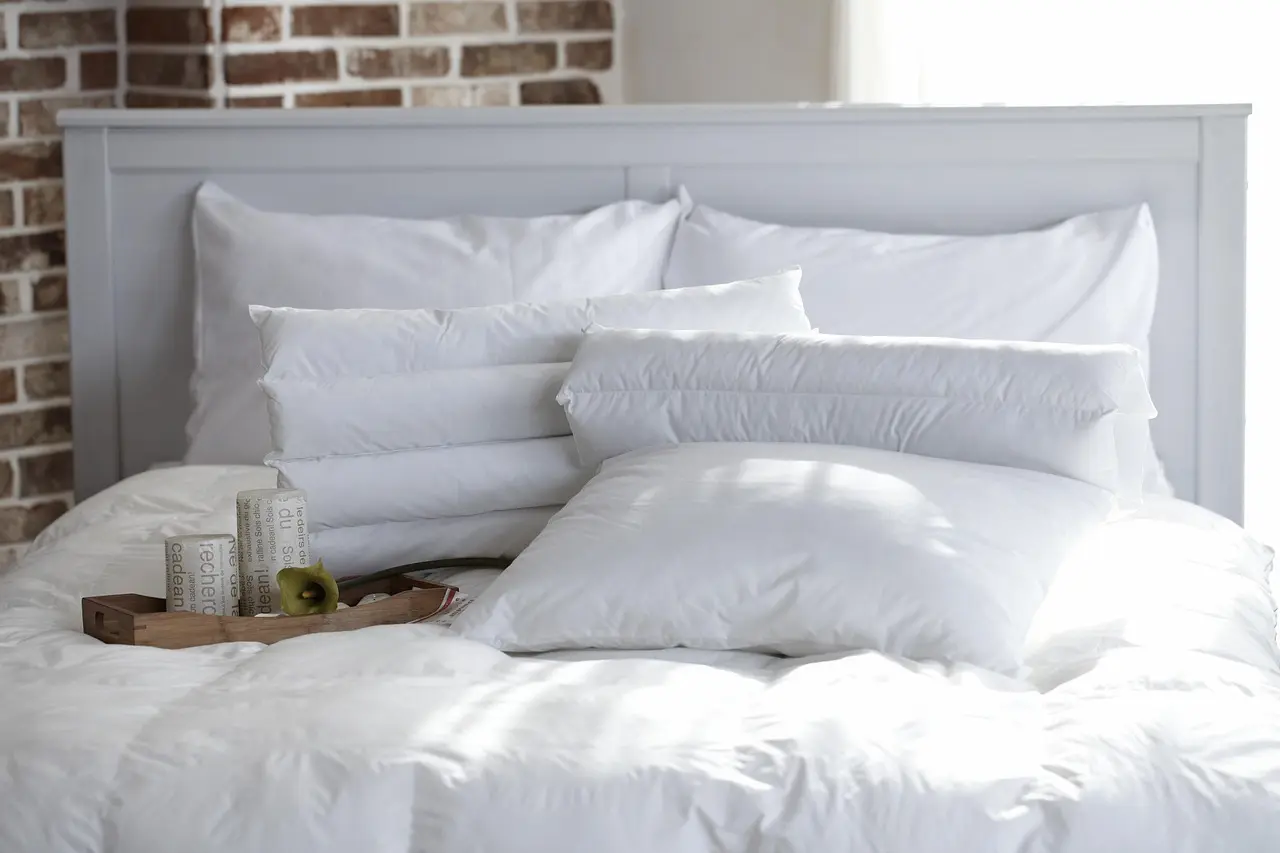
Body pillows for side sleepers
4. Body Pillow: 51cm × 137cm (20in × 54in)
Body pillows are long, full-length pillows designed to be hugged or placed between the knees while sleeping on your side. The most common size is 51cm × 137cm, though longer versions exist. Body pillows excel at side-sleeper support; they align the hips and reduce pressure on the knees and lower back by keeping the spine in a neutral position.
The idea behind that alignment is simple. When you lie on your side, the top leg tends to fall forward and twist the pelvis, which pulls on the lower back. Something firm and long between the knees stops that drop. A body pillow does the job while also giving your arms something to rest on, which is why some people find it easier to stay on their side through the night. Our guide to what a body pillow is goes into the benefits and use in more detail, and our best pillow for side sleepers page covers head and neck support.
Body pillows are also widely used by pregnant women for support under the abdomen and behind the back, reducing discomfort during the later stages of pregnancy. They can be used on any bed size, though they may feel cramped on a single or twin bed if you share it. A dedicated body pillow pillowcase is recommended. If you are pregnant and sleeping uncomfortably, or you have ongoing hip or back pain, mention it to your GP or midwife rather than relying on a pillow alone.
- Best for: Side sleepers, pregnant women, anyone with hip or lower back pain
- Pillowcase: Body pillow pillowcase (sold separately)
European square pillows for bed styling
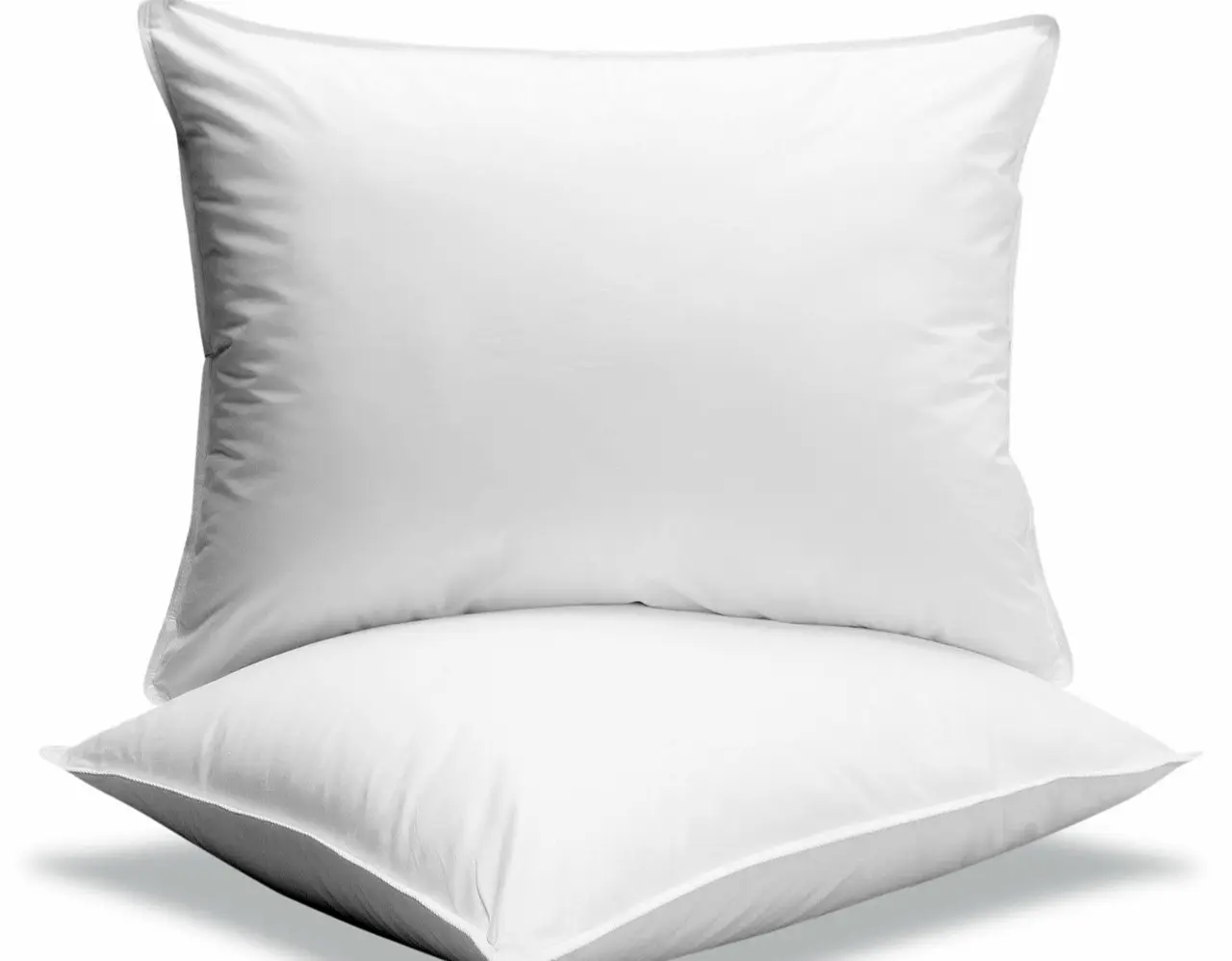
5. European Square Pillow: 66cm × 66cm (26in × 26in)
European square pillows are primarily decorative, used at the back of a bed arrangement to add visual depth and a sense of luxury. Their square shape and larger size make them ideal for stacking or propping against a headboard. While they can technically be used as sleeping pillows, they’re not designed for this purpose, and most people find them uncomfortable for extended sleep.
A single European square looks great on a twin or single bed. Two European squares placed side by side fill a queen-size bed beautifully and create a classic, hotel-inspired look. They also sit comfortably on king and super-king beds, often used in sets of three.
Layering is the usual approach. The squares go at the back against the headboard, your sleeping pillows sit in front, and you move the squares aside at bedtime. If you want to understand how decorative covers differ from the cases you sleep on, see our explainer on the pillowcase vs pillow sham difference. A long, round cushion is a different product again, and our page on what a bolster pillow is explains where those fit.
- Best for: Decorative bed styling, queen through super-king beds
- Pillowcase: European pillowcase (66cm × 66cm)
Questions to ask before buying pillows
Before choosing a size, consider these factors: How active are you during sleep? Active sleepers benefit from larger pillows that don’t fall away during the night. What is your primary sleep position? Side sleepers typically prefer thicker, firmer pillows; stomach sleepers prefer thin, soft pillows; back and combination sleepers do best with mid-loft options.
How large is your bed, and do you want pillows to fill it fully or just partially? Are you buying pillows for sleeping, decoration, or both? And finally, how many pillows do you sleep with? Some people sleep with two or three, while others prefer just one.
Write your answers down before you shop. It sounds fussy, but it stops the common mistake of buying on appearance in a showroom, where every pillow looks plush and nobody is lying on it for eight hours. If you share a bed, ask the same questions for your partner, because two people often want different pillows on the same mattress. Our best pillows in Australia page is a sensible next stop once you know the size you need.

How pillow size, loft and fill work together
Size here means the footprint of the pillow, which is only half the story. Loft, the height of the pillow once your head is on it, decides whether your neck stays in line with your spine. That is why side sleepers lean towards thicker pillows (they need to fill the gap between the ear and the shoulder), while stomach sleepers do better with something thin that keeps the head from tilting back.
Fill changes how a pillow behaves at any given size. Feather and down compress and can be reshaped by hand, whereas foam holds its shape and pushes back. A pillow of the same length can feel quite different depending on what is inside it, so treat dimensions as a starting point and then check the fill. Our comparison of feather pillow vs down pillow explains how those two differ, and our memory foam pillow care guide covers looking after the foam kind.
The general background on how pillows are made and used is covered in the Wikipedia article on pillows, if you want the wider history of the product.
Matching pillowcases to pillow size
Size labels on pillowcases follow the pillows, so the easiest way to get it right is to match the name: standard with standard, king with king, European with European. Queen pillows are the one exception worth remembering, because they sit comfortably in either a standard or a queen case.
A case that is too small stretches over the pillow, bunches the fill and wears at the seams. One that is too large leaves loose fabric that wrinkles under your face and slides around. A snug fit, with a little room at the end, is what you are after. King pillows are the least forgiving, since a standard case simply will not fit. Body pillows need a dedicated case, and these are usually sold separately from ordinary bedding sets.
If you are buying new sheets at the same time, check the bedding dimensions too. Our bed sheet dimensions and sizes guide helps you keep the whole set consistent.
Choosing the right pillow size for your bed
Pillow sizing in Australia is straightforward once you know the five main categories. For most queen-bed households, queen-sized pillows are the natural choice. For king beds, king pillows deliver the best fit. If you’re a side sleeper dealing with hip or back discomfort, a body pillow may be the most valuable sleep upgrade you make. And for a finished, styled look, adding European square pillows in front of your sleeping pillows elevates any bedroom instantly.
Start with your bed, then your sleep position, then the look you want, and in that order. If a pillow suits the first two, the third can usually be fixed with a decorative square or two. And if your sleep itself is a concern, as opposed to the bed setup, the Sleep Health Foundation is a good starting point for independent guidance on sleep and wellbeing.
Related Articles


